A Shared Claude Code Team Leaderboard for Your Org
A shared Claude Code leaderboard for teams Anthropic's analytics misses: Pro plans, public displays, cross-org competitions, hackathons. Join the waitlist.
Article Contents
Your company rolled out Claude Code to the engineering team. Licenses are paid, seats are assigned, and the Slack announcement got a dozen thumbs-up emoji.
Now: who's most active on it?
If you're on Claude for Teams or Enterprise with admin access, Anthropic ships a built-in analytics dashboard — and it includes its own top-10 leaderboard with GitHub-attributed PR metrics. For that audience, use it. It's good, and it's free with the plan.
This guide is for everyone else:
- You're on Pro, or your team is a mix of Pro and Free
- You want engineers, not just admins, to see the leaderboard
- You want to throw it on the office TV during a sprint
- You're running a hackathon, AI adoption week, or any time-bounded competition
- You're comparing across two teams, two companies, or a public group — something Anthropic's dashboard structurally can't span
Anthropic measures contributions inside one org, admin-private, on Team plan and above. This is a shared, visible leaderboard you control, that anyone on the team can see, on any plan.
How it works
Claude Code includes a built-in hooks system — Anthropic's standard mechanism for letting external tools observe what's happening in a session. When we onboard your team, we configure this hook to send usage data from each developer's local Claude Code to your team's Leaderboarded board.
A few things this means in practice:
- Nothing runs in the background. The hook only fires when Claude Code itself fires it — at the end of a conversation turn. No daemon, no polling, no scheduler running on your team's machines.
- Data goes directly to your board. Each developer's hook POSTs straight to a board you control. We don't operate a proxy or aggregation server in between, and we don't read anything off your team's disks ourselves.
- No code changes, no SDK wrappers, no middleware. Your application's source tree is untouched.
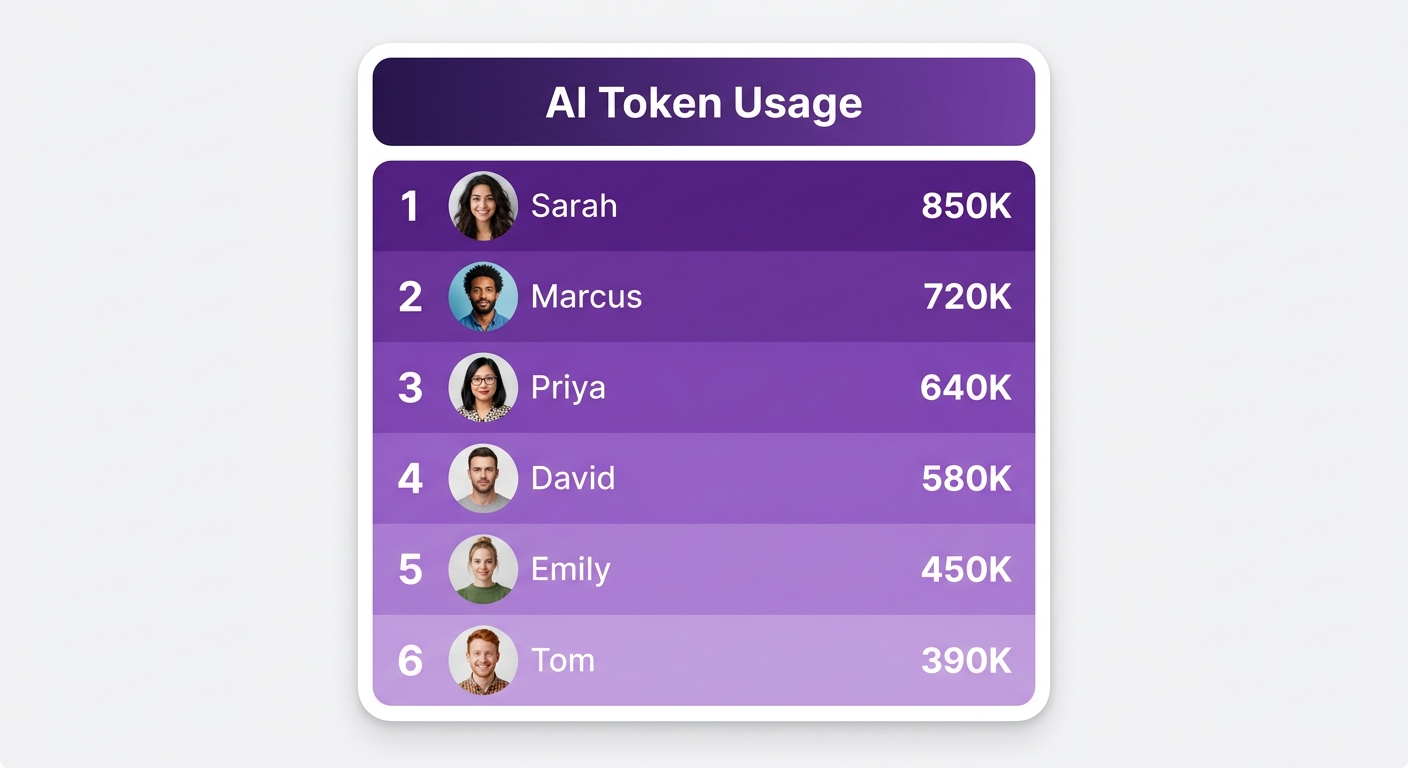
The leaderboard updates in real time. Engineers see their position move within seconds of finishing a turn.
How to get on board
We're rolling out access in waves via a waitlist. Early-access teams get:
- A board provisioned and configured for your team — no manual setup on your side
- A walk-through of the rollout from us, including the right metric for your use case
- One-command onboarding for each developer
- Cost-based scoring as soon as it ships (so Opus turns rank above Haiku turns of the same length)
- Direct line to us during rollout — we'll fix anything that breaks and ship requested features fast
If any of that sounds like your team, join the waitlist:
Get early access to the Claude Code team leaderboard
We're rolling out access via a waitlist. Join the list to be among the first teams to get the one-command CLI, cost-based scoring, and white-glove setup from our team.
Join the waitlistWhat waitlist teams get first
We're shipping the following changes to waitlist teams ahead of any public release:
- Cost-based scoring — instead of ranking by raw token count, the leaderboard ranks by USD cost computed from per-model pricing. A 5k-token Opus turn ranks above a 10k-token Haiku turn. No more climbing the board by being verbose on cheap models.
- De-duplication — retries and resumed sessions don't double-count, so the numbers always match what your team actually used.
- Model breakdown — see who's using Opus vs Sonnet vs Haiku, not just total volume.
Waitlist teams get each of these as soon as it lands.
A note on what this measures
The current setup ranks by raw token count — the sum of input and output tokens per developer. That's a measure of activity, not productivity. Someone running long Opus turns to refactor a hairy bit of code shows up the same as someone running long Haiku turns to ask trivia questions. The leaderboard tells you who is engaged with the tool, which is the question most teams actually have when they roll Claude Code out — but if you're looking for a productivity metric specifically, Anthropic's GitHub-attributed PR metrics (Team/Enterprise plan) are closer to that.
Cost-based scoring (shipping to waitlist teams first) sharpens this — Opus turns rank above Haiku turns of the same length, so you can no longer climb the board by being verbose on cheap models. Same mechanism, sharper metric.
Display and share
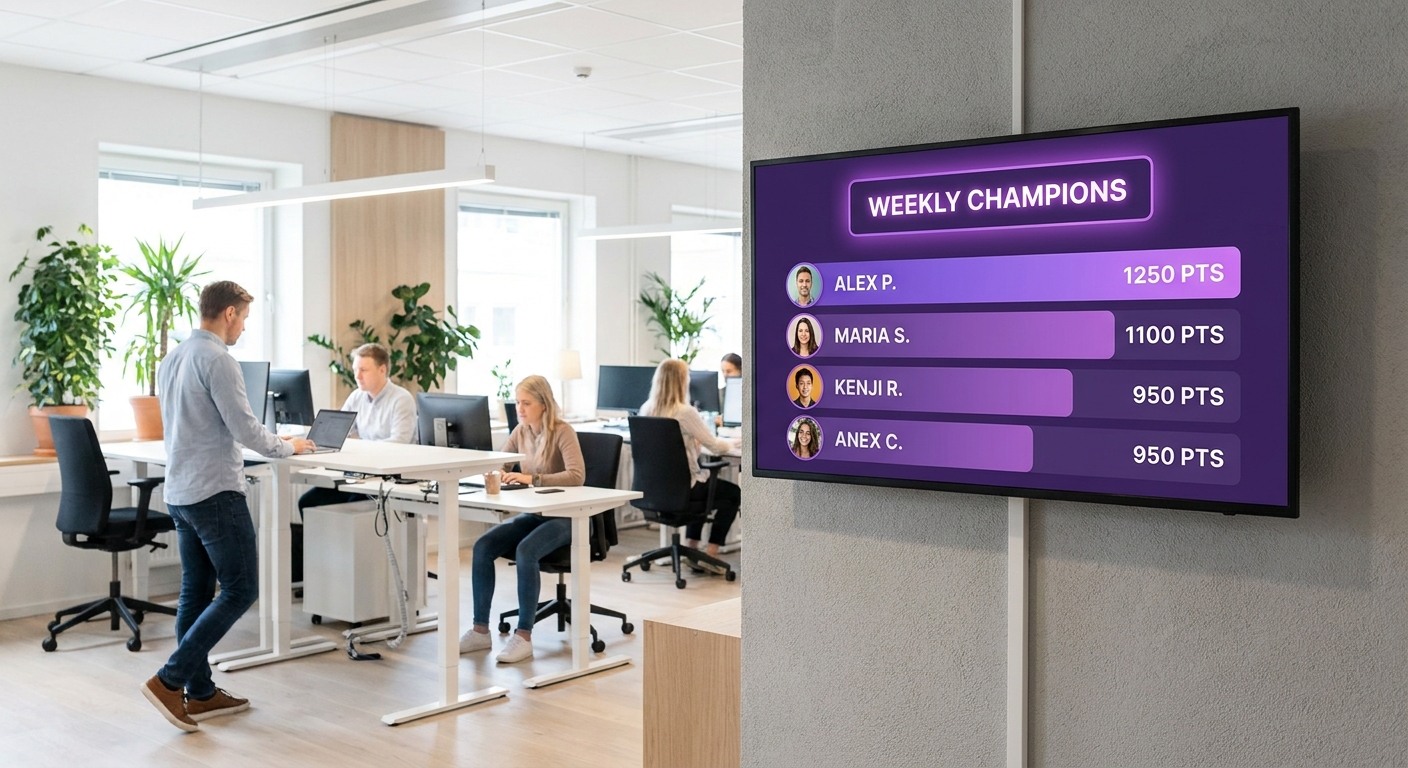
Once data is flowing, share the leaderboard:
- Office TV: Open the public link fullscreen on a monitor in a common area
- Slack: Pin the link in your engineering channel
- Notion or intranet: Embed the leaderboard using an iframe
- Weekly standup: Pull it up to celebrate top users and encourage engagement
The leaderboard updates in real time. When a developer finishes a Claude Code session, their ranking updates within seconds.
Get early access to the Claude Code team leaderboard
We're rolling out access via a waitlist. Join the list to be among the first teams to get the one-command CLI, cost-based scoring, and white-glove setup from our team.
Join the waitlistCommon Questions
"Why not just use Anthropic's built-in analytics dashboard?"
If you're on Claude for Teams or Enterprise, with admin access and the GitHub app installed, Anthropic's dashboard is excellent — and it has its own top-10 leaderboard. Use this leaderboard when you're on Pro, when you want engineers (not just admins) to see the leaderboard, when you want to put it on the office TV, or when you're running a competition that spans teams, organizations, or a fixed time window.
"How do I get access?"
We're rolling out in waves via a waitlist. Join the list and we'll set up a board for your team, walk you through the rollout, and onboard each developer with a single command.
"Do I need to modify any application code?"
No. Claude Code already writes everything we need to disk locally. Once your team is set up, usage is reported automatically — no SDK changes, no middleware, no modifications to your application.
"What does the leaderboard actually measure?"
Today it ranks by raw token count (input + output) per player, summed across all sessions. We're rolling out cost-based scoring (USD spend, computed from per-model pricing) so an Opus turn ranks above a Haiku turn of the same length. Waitlist teams get the new metric first.

Written by Caspar von Wrede
Founder of Leaderboarded. Building tools that help teams track progress and stay motivated.