How a Senior Care Company Runs a Quarterly QA Team Competition
See how Sarah at Senior Care Connect turned a team restructure into a quarterly competition—from 30-minute trial to full rollout in one week.
Article Contents
A Restructure That Could Have Gone Badly
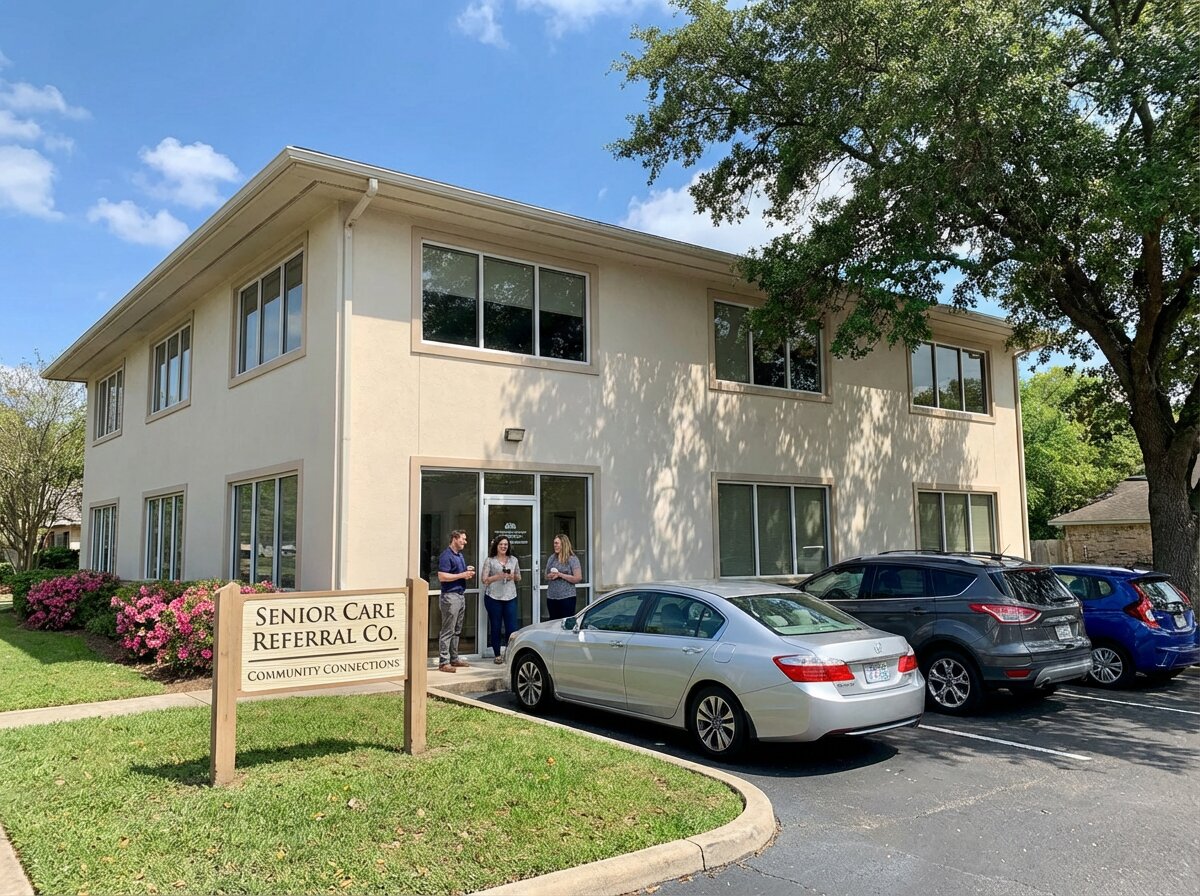
At the start of 2025, Sarah—Senior Manager of Quality Analytics at Senior Care Connect—split her 15-person QA team into two groups. Some team members were now reporting to former peers who'd just been promoted to leads. It's the kind of org change that can quietly damage morale if it isn't handled well.
Senior Care Connect is a senior living referral service with around 500 remote salespeople across the US. Sarah's team listens to calls and delivers quality feedback—repetitive work that needs constant motivation to maintain standards.
"We needed different incentive programs to keep them motivated. If you're doing this mundane work that's pretty repetitive, it keeps you engaged and keeps you alert and keeps you on your toes, and able to deliver good feedback."
She needed something that would turn the restructure into a positive moment—establish the new leads' authority, create healthy competition between the teams, and make performance visible in a way that felt fair.
From Search to Rollout in One Week
Sarah searched Google for "point reward system" in early 2025 and found Leaderboarded immediately.
The timeline from discovery to deployment:
- 30 minutes to test and set up the system
- 2 days to get director approval
- 1 week to full rollout across both teams
"I was like, 'This is going to work.' It was user-friendly, so I was easily able to go in there and create the scoreboards, create the leaderboards, and add pictures of my team, and make it really personalized. So it was just really easy to navigate and use."
The low price point helped with the director pitch. Approval came the next day.
The Competition Structure
Sarah created two teams: Team Phoenix and Team Summit. Seven or eight members each, with a lead for each. Individual points roll up into team totals, so there are two ways to win—personally and collectively.
Point categories were developed with input from the team leads and Sarah's manager:
- Schedule adherence — clocking in and out on time
- No canned responses — original, thoughtful feedback instead of templates
- Exceeding quota — completing more daily workbooks than assigned
- Meeting participation — active contribution in calibration sessions
- Ad hoc excellence — going above and beyond on special projects
"Completing more than your assigned workbook expectations, daily, would earn you individual and team points."
The weekly process is simple: leads track points in Excel throughout the week, send tallies to the project coordinator on Friday afternoon, and the coordinator updates Leaderboarded and posts a screenshot in Slack. Bonus points can show up any time for exceptional work.
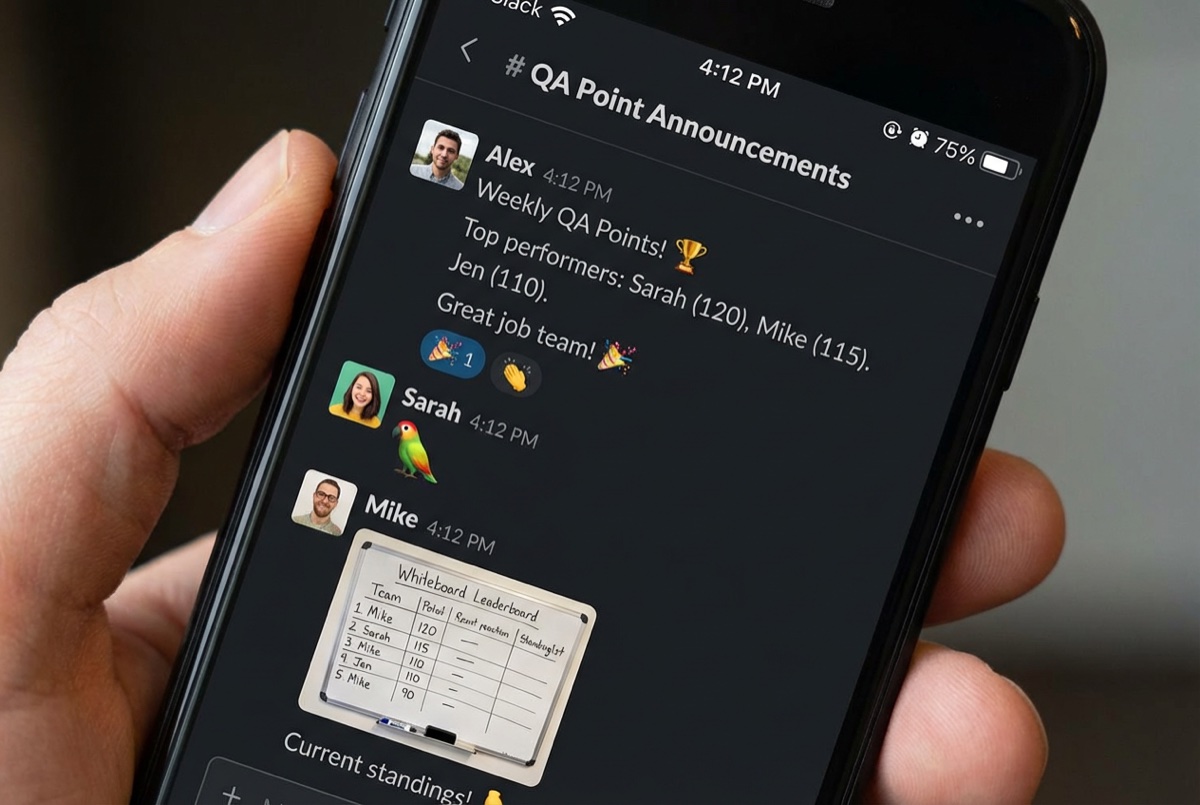
Two dedicated Slack channels keep it organized: a public one for all team members showing standings and announcements, and a leads-only channel for backend decisions. Rewards are a $100 gift card for the monthly Employee of the Month and $100 for each member of the winning team at the end of each quarter. The director buys the cards himself and presents them personally.
What Happened
By the end of the first quarter, the gap between teams was six points.
"There's like a six point difference, I think, between the team, so it's really close. So everybody's kind of itchy to earn points today."
The competition created exactly the culture Sarah was after:
"It's a serious competition... they're trying to pump their teams up. On the Slack channel, you can see it. There haven't been a lot of trash talk in our management meetings, but there has been Slack trash talk. Lots of congrats and pats on the back via Slack."
The most tangible performance shift: more people consistently exceeding their daily call quotas. Before, someone might complete 15 workbooks when assigned 10, but the pattern wasn't visible. The leaderboard surfaces who's consistently above expectations without requiring manual spreadsheet analysis each week.
The Rollout Was Also the Strategy
Sarah didn't introduce the program herself. She handed it to the new team leads:
"I actually let my team leads do that. This is one of the first things that I want you guys to roll out. Because remember, the team structure just happened. And so it was also a way for them to gain respect with their teams."
That detail matters. The program wasn't just motivating analysts—it was the first significant initiative each new lead delivered to their team. It established their authority in a positive context rather than through enforcement.
Sarah's director noticed the results and suggested rolling the program out to other departments. He also asked for a mid-quarter engagement survey to measure the effect alongside other team initiatives.
Why This Works for Remote QA
QA work is inherently hard to make visible. Analysts do good work, consistently, in isolation—and it can disappear into spreadsheets without anyone noticing. The employee engagement value of a leaderboard in this context isn't about gaming the system. It's about making patterns visible that would otherwise require someone to dig into KPI reports to find.
The shared presentation link means every team member can see standings throughout the week—no mystery about where the teams stand or how point decisions get made. For a fully remote team that already lives in Slack, the leaderboard integrates into an existing workflow rather than creating a new one.
Sarah's verdict after the first quarter: six-point spread, above-quota performance up, and a team that's actively watching the board as the quarter closes.
Ready to transform team performance with live leaderboards? Get started with Leaderboarded for free and create engaging competitions that motivate remote teams.

Written by Caspar von Wrede
Founder of Leaderboarded. Building tools that help teams track progress and stay motivated.