Strength Training Challenge Ideas for Employee Wellness
Launch a workplace strength training challenge. Exercise ideas, safety tips, and progress tracking with our free online leaderboard tool.
Article Contents
About fifteen years ago — before TikTok, before most viral challenges — office workers across the world started dropping to their elbows and toes during lunch breaks. The plank challenge had arrived. For four weeks, people would pause their workday to see who could hold plank position the longest.
 Planking in the good old times
It looked a bit ridiculous. Conference rooms turned into impromptu gyms. But something surprising happened: teams that planked together actually worked better together. The shared struggle (and shared complaints) created bonds that meetings never did.
Why Strength Challenges Beat Solo Workouts
Here's an uncomfortable truth about exercise habits: we stick with routines that don't work because they're familiar. A study by OnePoll found that 68% of people persist with ineffective workouts simply because changing feels hard. We're creatures of comfort.
A workplace challenge breaks that pattern. When other people are counting on you — or competing against you — showing up matters. That social pressure isn't a bug; it's the feature that makes these programs work.
What Happens When Teams Train Together
People actually show up. Not everyone feels motivated every day. But in a team challenge, someone is always ready to boost morale when you'd rather skip. That consistency compounds.
Energy levels rise. Strength training increases oxygen flow throughout the body. More oxygen means more energy, which means better focus at work. The productivity gains aren't theoretical — they're measurable.
Stress drops. Exercise releases endorphins, the hormones that improve mood and help cope with pressure. A 15-minute training break costs less than the productivity lost to stress-induced distraction.
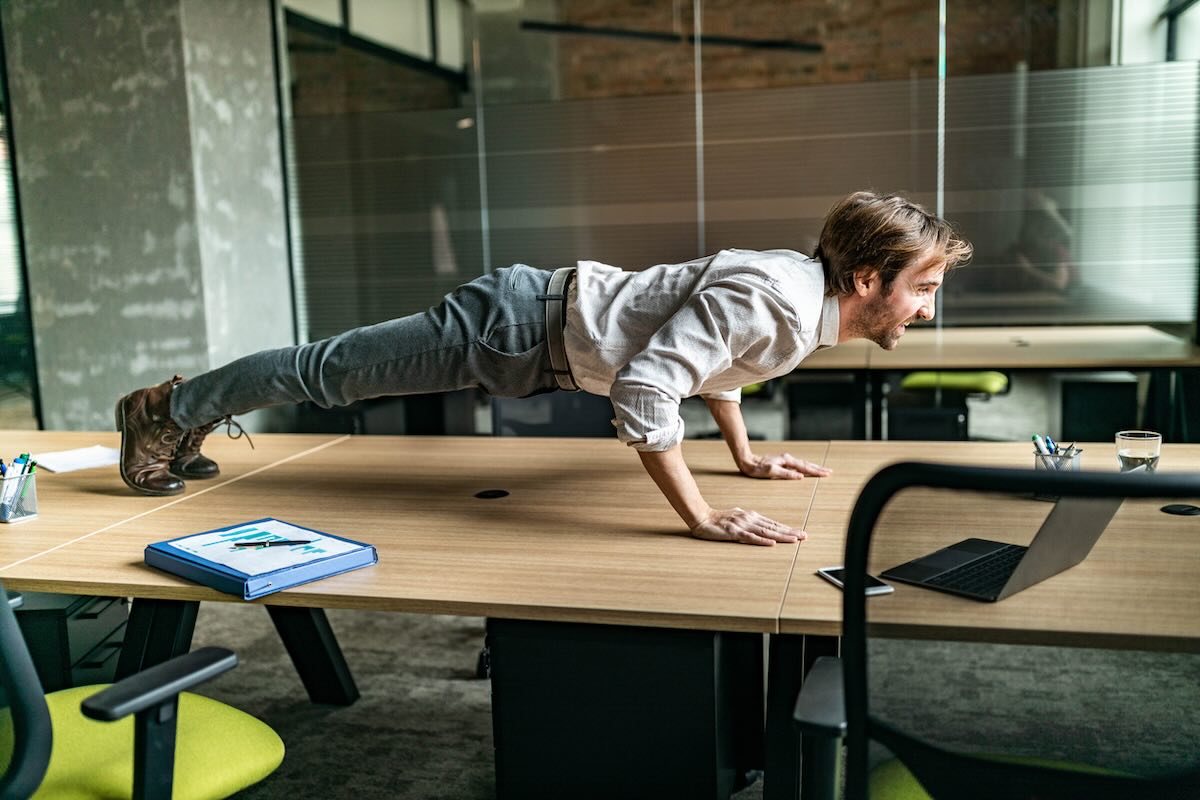 For some reason, Jake preferred to do push-ups in the conference room
Fewer sick days. A stronger body resists injury and recovers faster from common ailments. Back pain, shoulder tension, repetitive strain — the typical office complaints — all decrease with regular strength work.
Setting Up Your Challenge
Get Leadership Involved First
A wellness initiative without executive participation feels like another mandatory HR program. An initiative where the CFO posts their plank time feels inclusive. Get at least one visible leader to participate, not just sign off.
Design for Different Ability Levels
Not everyone starts at the same fitness level. Some employees have physical limitations or disabilities. Your challenge needs to accommodate everyone who wants to participate.
Create mixed teams based on fitness abilities and job roles. This forces people to interact across departments and prevents the already-fit from dominating every competition.
Set Clear Goals
Before starting, assess where everyone is. This baseline measurement lets participants track personal improvement — often more motivating than comparing against naturally athletic colleagues.
Then set daily, weekly, and monthly targets. Concrete goals drive action better than vague encouragement.
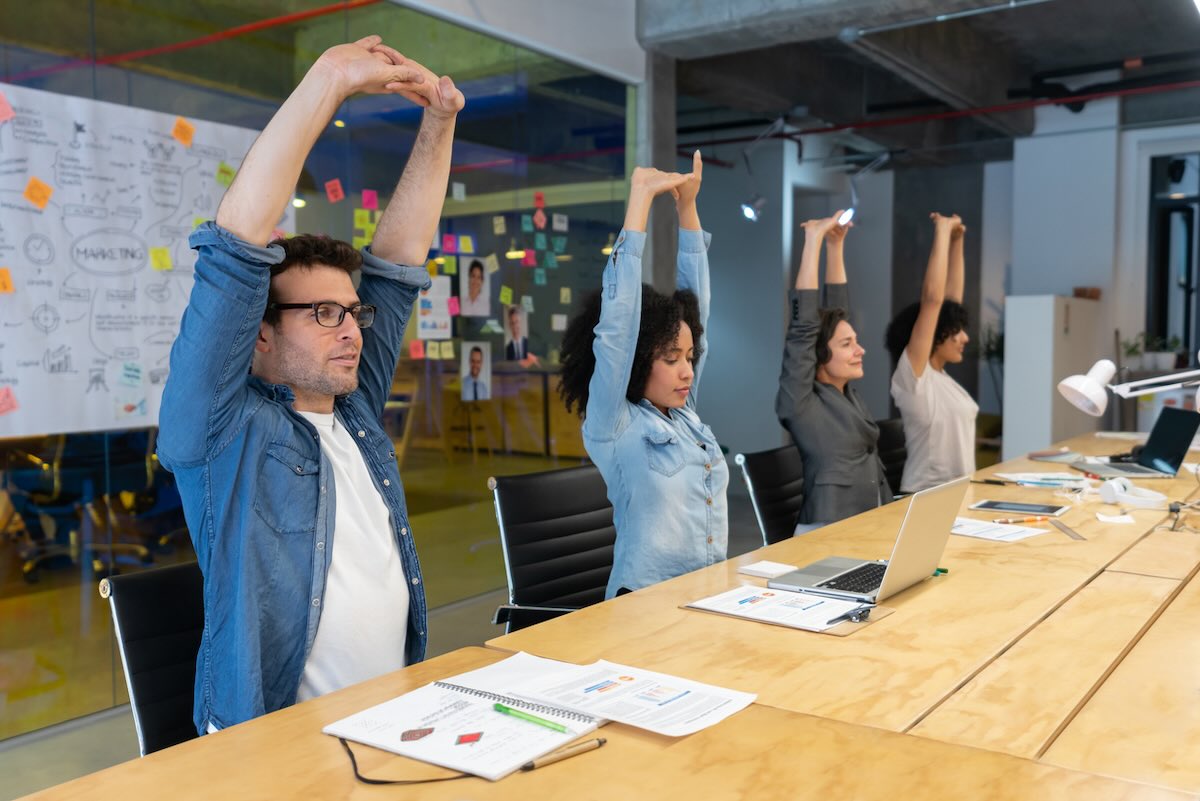 Definitely healthier than working on an Excel file
Challenge Ideas That Work
Strength isn't just about how many reps you can do. Endurance, balance, and holding difficult positions all count. Mix up your challenges to keep things interesting:
Dead-hang challenge. Time how long participants can hang from a pull-up bar. Simple equipment, clear metric, surprisingly difficult.
Push-up minute. Count how many push-ups someone can complete in 60 seconds. Modify for knee push-ups if needed.
Lunge walk. Measure how far participants can walk in continuous lunges. Distance-based, not rep-based, which levels the playing field.
Single-leg shoe challenge. Put on socks, shoes, and laces while balanced on one leg. Tests balance and core stability without requiring any equipment.
These are starting points. Ask your employees for ideas — they often know what will resonate with their colleagues.
Tracking Progress with Leaderboarded
Challenges lose momentum when progress is invisible. If results live in someone's inbox or a rarely-opened spreadsheet, engagement fades. You need a visible, updated tracker.
Using a Goal Tracker
For team-based challenges with cumulative goals, a goal tracker works well:
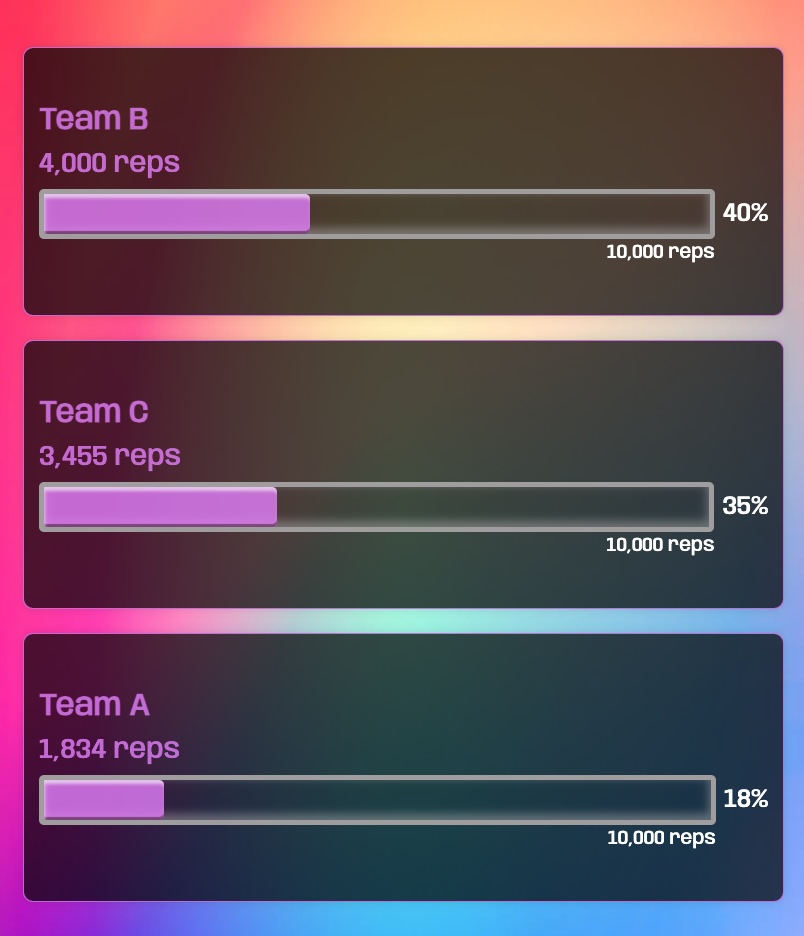 A goal tracker from Leaderboarded.com
Here's how to set it up:
Set team goals (like "1,000 total push-ups this month"), customize the scoring units (reps, pounds, minutes), and update progress as participants complete workouts. Learn more about customization.
Using a Leaderboard
For individual competitions or ranked challenges, a leaderboard creates more excitement:
 An online leaderboard from Leaderboarded.com
Choose the leaderboard type that fits your challenge (individual or team), enter participant names, and customize the scoring units (reps, pounds, minutes). Update scores as the challenge progresses. Learn more about customization.
Safety First
Strength training done wrong leads to injury. Even simple exercises can cause problems if someone has underlying physical issues. A few precautions:
Consider requiring doctor clearance. For more intense challenges, a doctor's note protects both employees and the company.
Hire a trainer for complex movements. Dead hangs and lunges are low-risk. Weighted exercises or anything involving equipment should have professional oversight.
Prepare the space. Remove obstacles. Make sure people wear appropriate shoes (not heels or dress shoes). Have water available.
Start easier than you think necessary. Beginners who get injured in week one don't come back for week two.
The goal isn't to turn your office into a CrossFit gym. It's to create a shared experience that builds team bonds, improves health, and makes work a little less sedentary. Start with one simple challenge and see what happens.


Written by Caspar von Wrede
Founder of Leaderboarded. Building tools that help teams track progress and stay motivated.