Conference Gamification: 12 Ideas That Get Attendees Competing
Twelve conference gamification formats that keep attendees engaged past day one, drive booth traffic for sponsors, and fill afternoon sessions.
Article Contents
Every conference has the same shape. Day one, the room is full and the energy is real. By the first afternoon session on day two, a third of the seats are empty, the sponsors are asking why nobody came to their booth, and the networking is happening in the same four clusters it formed in on the first morning.
Gamification fixes this less by being fun and more by being visible. Points on their own change very little. A live leaderboard on a screen people walk past between sessions changes a lot, because it turns every individual decision — which session to attend, which booth to visit, whether to talk to a stranger — into something with a running score attached.
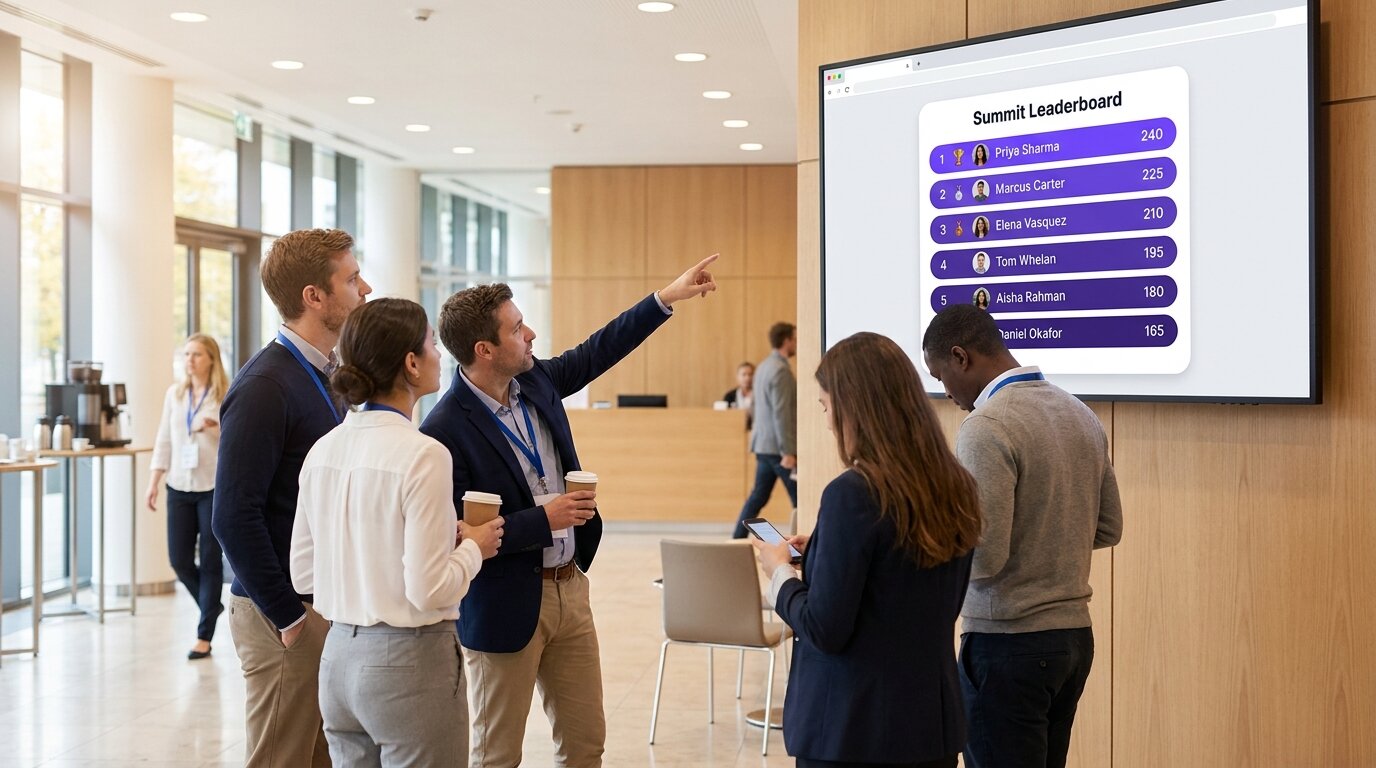 Points on their own change very little. A screen people walk past between sessions is what makes them matter.
Below are twelve formats that work, grouped by what you're actually trying to fix.
Getting attendees moving around the venue
1. QR checkpoint hunt
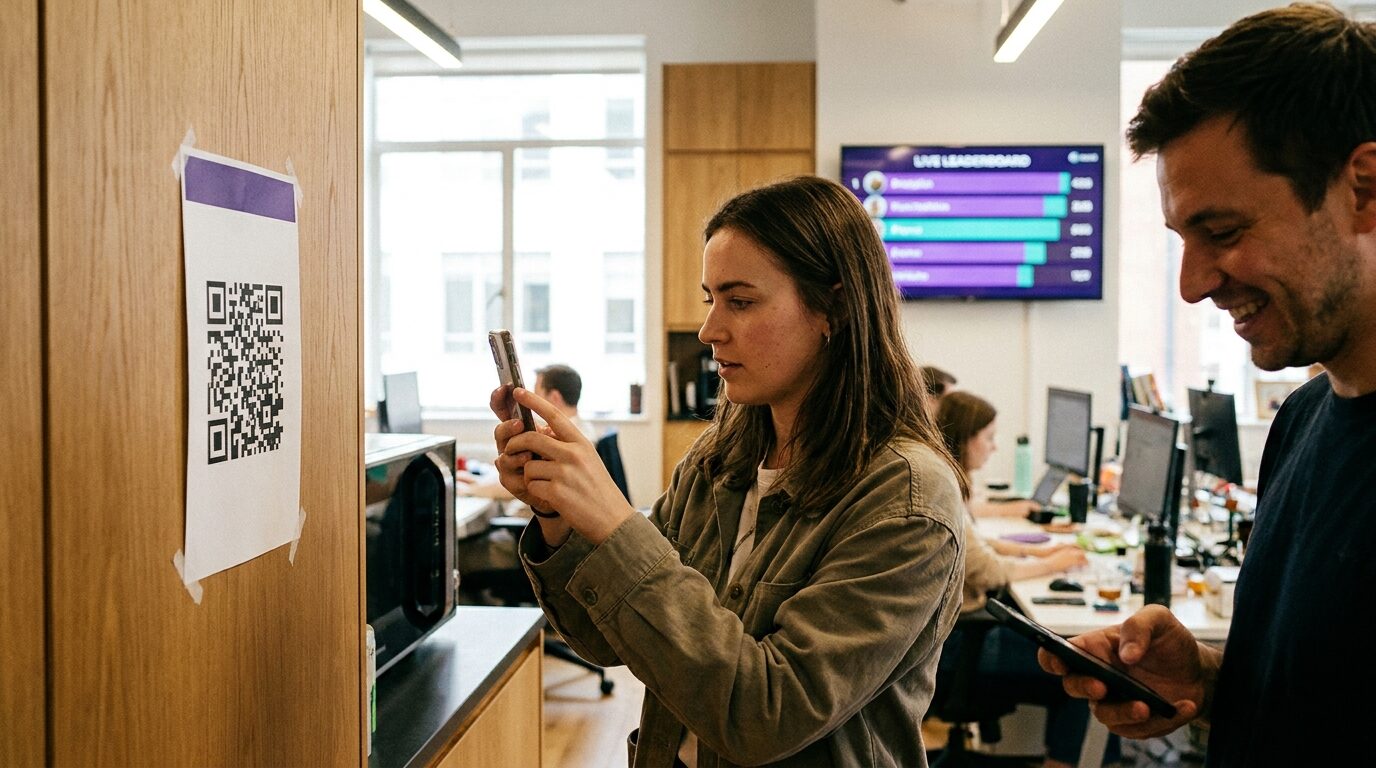
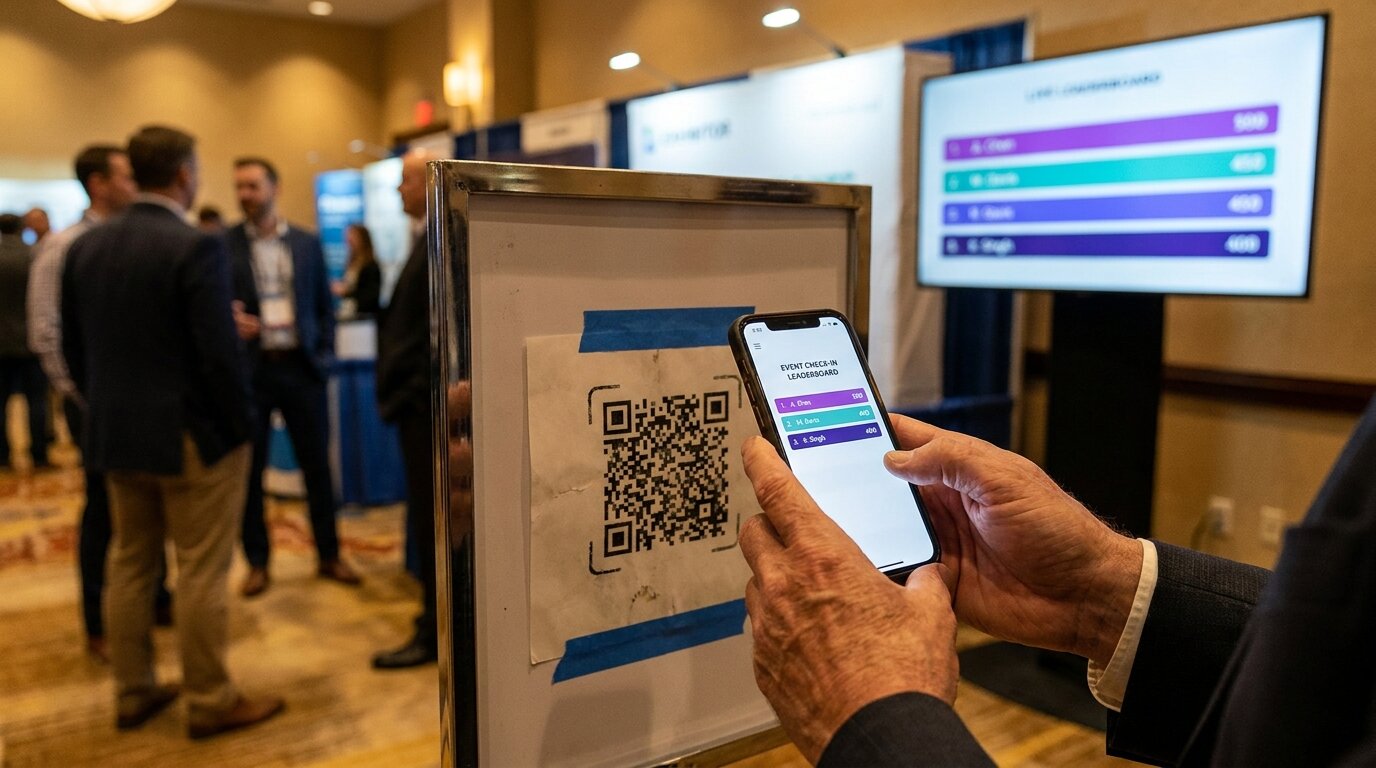
Put a QR code at each booth, room, or landmark. Attendees scan as they go and each scan awards points. It's the highest-participation format on this list because the barrier is a phone camera and nothing else — no app, no signup. Weight the codes by how much you need traffic: the far corner of the exhibition hall is worth triple the code by the coffee. Our QR scavenger hunt runs this, and the setup walkthrough covers code placement.
2. Sponsor booth passport
The classic, and it still works because sponsors will pay for it. Attendees collect a stamp or scan at each sponsor booth; a full passport enters the prize draw. The operational detail that matters: require a conversation, not just a scan. Give the booth staff the scanning device rather than the attendee, so the point costs thirty seconds of talking.
3. Session attendance points
Award points for checking in to sessions, with bonus weighting on the ones you know will be under-attended — the post-lunch slot, the final afternoon, the breakout track nobody picked. This is the single most direct fix for empty rooms, and it also gives you an attendance dataset you can show speakers and sponsors afterwards.
4. Networking bingo
A grid of prompts — "someone from a different industry", "someone who's spoken on stage", "someone who travelled furthest". Attendees fill squares by meeting people who match. It gives shy attendees a script, which is the actual barrier to conference networking.
Filling sessions and keeping the room awake
5. Live trivia between keynotes
Ten questions in the changeover slot while the stage resets. Mix easy general knowledge with questions about the morning's talks, which quietly rewards people who paid attention. Keep it to five minutes — it's a palate cleanser, not a segment.
6. Speaker Q&A points
Award points for asking a question from the floor. It solves the excruciating silence after "any questions?", and it's cheap to run: the session chair notes the name, someone adds a point. Cap it per person so one enthusiast doesn't farm it.
7. Workshop case race
For training-led events — medical, pharma, professional certification — split the room into teams and score them through a case or scenario, round by round. This is one of the formats we see most often on real boards: a CME case race or a certification workshop where teams are scored across several rounds and the standings carry between sessions.
Team competitions for internal events
8. Department vs department at the sales kickoff
Internal kickoffs and partner summits are where team scoring works best, because the teams already exist and the rivalry is real. Score across the whole event — quiz results, challenge wins, attendance, a pitch competition — and keep one cumulative board running for the full two days.
9. Racing simulator hot-lap challenge
Rent a sim rig, put it in the break area, and run a fastest-lap board all day. It is consistently one of the strongest draws at corporate events: people come back repeatedly to try to beat their own time, and the board gives spectators a reason to stand around it. Set it up so lap times post to a big screen above the rig, and reset the board each day so day-two attendees aren't chasing an unbeatable time.
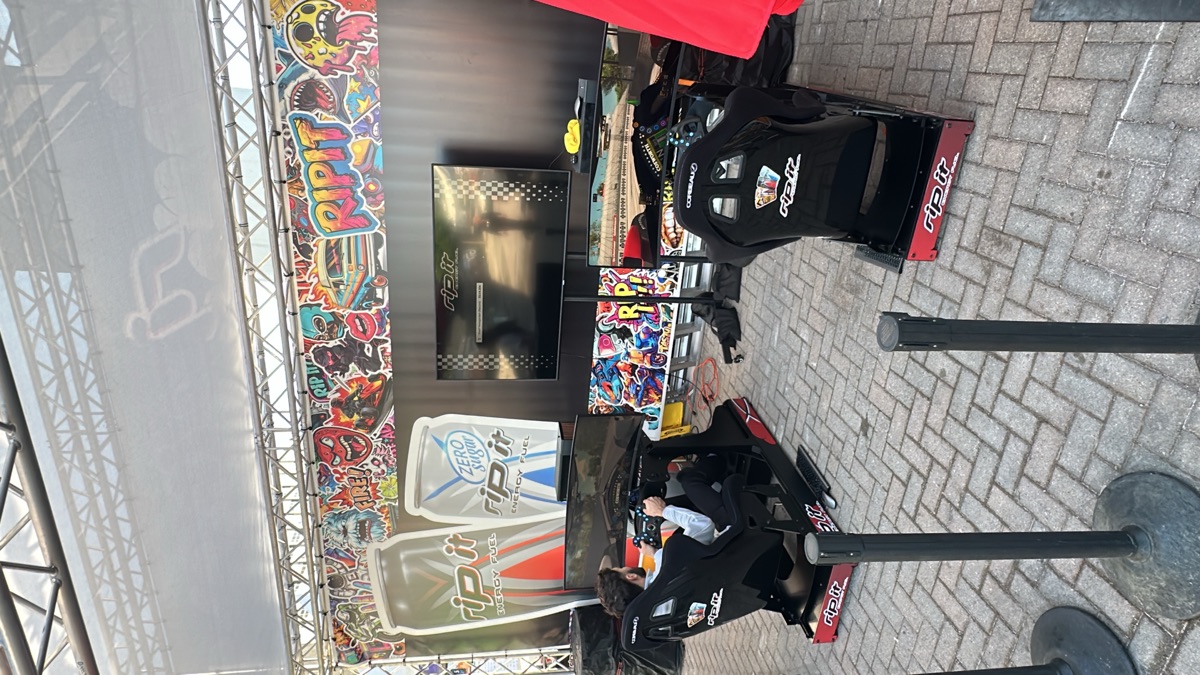 A hot-lap board turns a single rig into an all-day attraction — people return to beat their own time.
10. Step or movement challenge across the event
Conference venues are enormous and everyone complains about their feet. Lean into it: a team step challenge across the two or three days, self-reported each evening. It works especially well at events with a wellness or healthcare theme, and it's the one format that keeps running while people are in sessions.
Formats that generate content
11. Photo challenges
A themed list — the best view from the venue, the most creative use of the branded tote bag, a team photo at the sponsor wall. Attendees post and points are awarded by vote or by a judge. You end up with a library of user-generated event photography that's worth more than the prize you gave away.
12. Prediction and estimation games
Ask attendees to predict something that resolves during the event: the closing keynote's headline number, the total raised for the event charity, how many people attend the final session. It costs nothing to run and it gives you a reason to bring everyone back for the reveal.
Putting it on a screen
None of the above works if the scores live in a spreadsheet. The mechanism that makes conference gamification function is a single shared board that updates live and that attendees can check on their own phones between sessions.
Practically: one leaderboard link, updated by your team from a phone, opened on the venue screens, the registration-desk monitor, and the display outside the main room. Attendees open the same link to see where they stand. The display setup walkthrough covers screen sizing, refresh behaviour, and getting a board onto a venue TV that you don't control.
One piece of practical advice: announce the standings out loud at least twice a day, from the stage. A board nobody mentions gets ignored; a board that gets a thirty-second callout before the afternoon keynote gets checked by everyone in the room.
Closing the loop
Run the prize ceremony as part of the closing session rather than as a separate thing at the end. It gives people a reason to stay for the final slot, which is the session that empties out first at every conference ever held.
Announce more than one winner. A single grand prize means everyone outside the top three stops playing by lunchtime on day two. Category winners — most booths visited, most sessions attended, fastest lap, best photo — keep far more of the room in contention.
Running it for a client
If you're an agency or production company running the event for someone else, the leaderboard usually needs to look like the client's brand rather than ours. We build branded boards to order — your colours, logo, and layout, delivered ahead of the event — which is what most of the event agencies we work with use. See custom event scoreboards for how that works.
For booth-level games rather than whole-conference scoring, trade show games covers the formats that draw a crowd to a single stand.

Written by Caspar von Wrede
Founder of Leaderboarded. Building tools that help teams track progress and stay motivated.