Chess Tournament Leaderboards: Standings, Points, and Ratings
Run a chess tournament leaderboard that tracks standings, tiebreaks, and rating changes across Swiss-system, round-robin, and club league formats.
Article Contents
Chess tournaments generate a lot of data: round-by-round results, cumulative points, tiebreak scores, rating changes. Managing and sharing this information clearly is one of the most common organisational headaches for chess clubs, school teams, and tournament directors.
A live chess leaderboard solves the visibility problem — players can check current standings between rounds, spectators can follow the tournament without asking the organiser, and the final ranking is transparent before the prize ceremony.
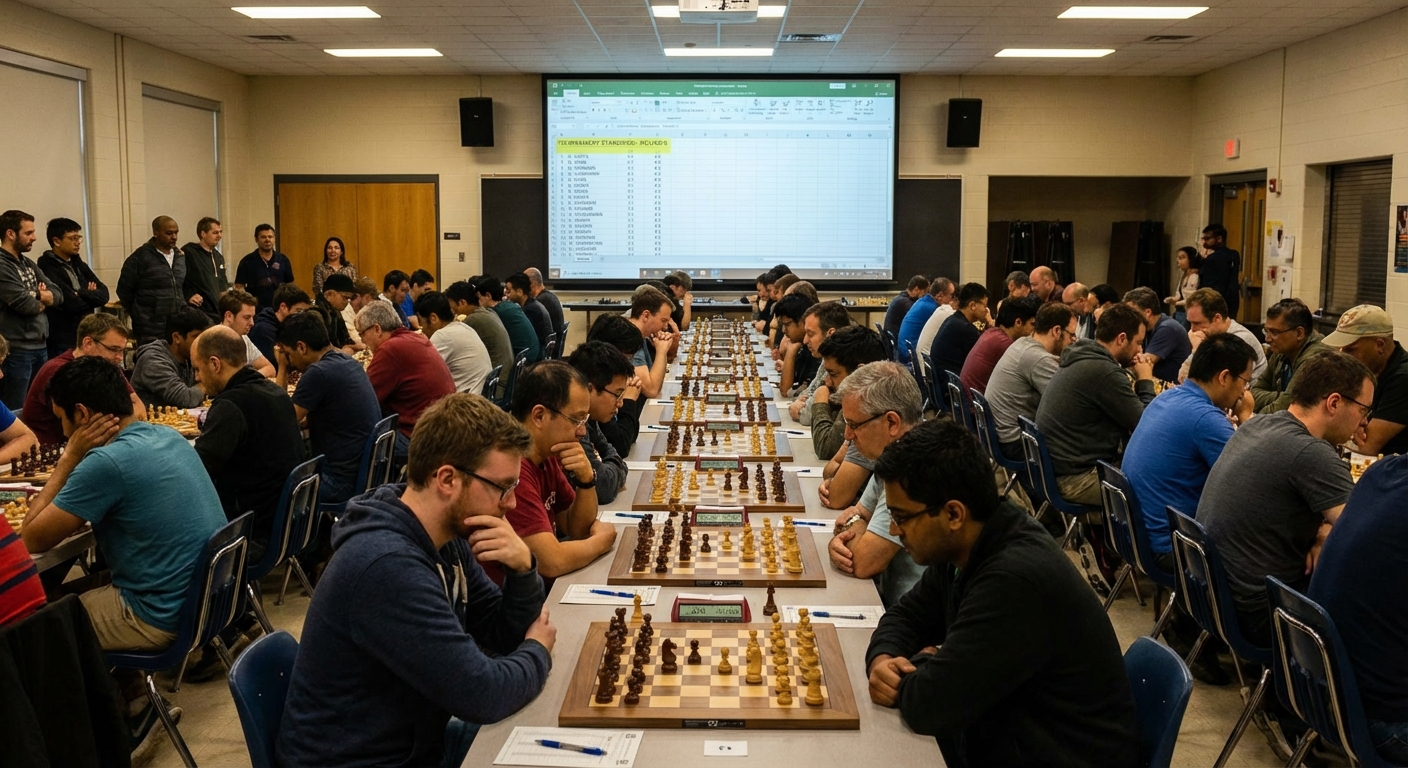
Chess Tournament Formats and Scoring
The format you're running determines how the leaderboard is structured. The main formats:
Swiss-system: players are paired based on current standings, with no elimination. Each player competes in a fixed number of rounds. Points are typically 1 for a win, 0.5 for a draw, 0 for a loss. Final standings are sorted by total points, with tiebreak systems (Buchholz, Sonneborn-Berger, or direct comparison) applied when players finish level.
Round-robin: every player plays every other player, often used in smaller club events or invitational tournaments. More decisive final standings than Swiss, but only practical for small fields (typically 6–12 players).
Club league / team match: teams of players compete in board-by-board matches, with points from individual boards aggregating to team match results and season league standings.
Rapid or blitz series: time-limited formats where multiple games are played in a session. Often uses the same Swiss or round-robin structure but with more rounds compressed into a day.
For all of these, the core leaderboard need is the same: current cumulative points, player names, and the ability to update after each round.
Tracking Rating Systems
Chess ratings — ELO, Glicko, FIDE, national ratings — are central to competitive play but require specialist calculation tools. Leaderboarded is not a rating calculation engine; for official FIDE or national federation events, you'll need software like Swiss-Manager, Vega, or the relevant federation's submission system to calculate and submit rating changes.
Where Leaderboarded fits is in the display layer: showing the tournament standings, current-round results, and any rating-adjacent information you want to show publicly. A common pattern for club tournaments:
- Use a dedicated pairing tool to manage pairings and calculate ratings
- Export or manually note the current standings after each round
- Update the Leaderboarded board with current totals so players and spectators can see live rankings on any screen or phone
For club league tables that run across a season, Leaderboarded works well as the persistent standings display — updated after each match week, always accessible via the same link.
Setting Up a Chess Leaderboard
For a standard Swiss or round-robin tournament, a simple single-score board works well:
- Each player is a participant, with their name displayed
- Score is their current cumulative points (0.5 increments for draws)
- After each round, update scores manually — it takes under a minute for events with 10–30 players
For tracking tiebreak scores alongside points, use a multi-column board. One column for tournament points, one for Buchholz score or other tiebreak metric. The board sorts by the primary column, with the secondary visible for reference.
For team events, Leaderboarded's team boards let individual board results roll up to team totals. In a 4-board team match, each player's individual score (0, 0.5, or 1) feeds into the team's match score automatically.
School and Club Chess Competitions
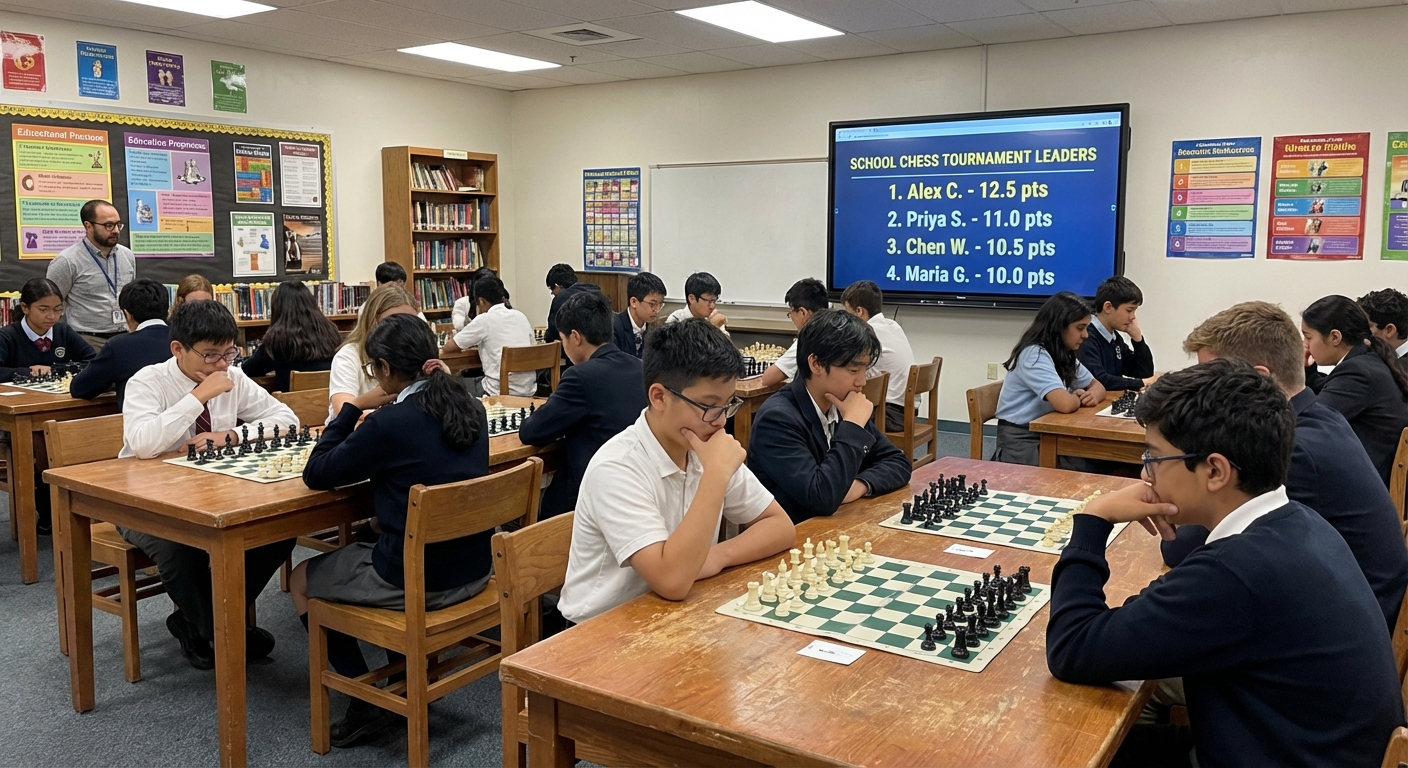
School chess competitions and club internal events often run without official rating implications, which gives more flexibility in how you display and track results.
For school tournaments:
- A live leaderboard on the school's chess club page or projected on a screen creates a more engaging event atmosphere
- Students can follow standings between rounds without interrupting the organiser
- The board serves as a public record of results at the end of the tournament
For club championship events:
- A persistent board updated after each club night keeps members engaged across the season
- Members who can't attend a given session can check results without waiting for the newsletter
- The end-of-season standing is already documented when the final prizes are announced
Displaying Results at a Tournament
For events held in a venue — a school hall, a community centre, a chess club premises — the public leaderboard link opens in any browser and displays full-screen without any setup. If you have a spare laptop or monitor, putting it on the standings page gives players something to check between rounds without crowding around the pairing sheet.
For online tournaments run through Chess.com, Lichess, or similar platforms, those platforms have their own built-in standings. A Leaderboarded board is most useful for supplementary tracking — cross-tournament season points, club league tables that span multiple online events, or displaying results alongside commentary for a live audience. If you run other tabletop game tournaments alongside chess, the board game tournament leaderboard guide covers formats like round-robin and knockout for card and strategy games.
Frequently Asked Questions
Can I show half-points (draws) on the leaderboard? Yes. Leaderboarded supports decimal scores, so 0.5-point draws display correctly. A player with two wins and one draw shows 2.5.
How do I handle tiebreaks in the display? You can use a multi-column board with one column for tournament points and additional columns for tiebreak values. The primary sort is by total points; tiebreak columns are visible for reference but don't affect the automatic sort order. If you need tiebreaks to determine displayed rank, update the main score column to reflect the tiebreak-resolved order.
Can I use this for an ongoing club league across a full season? Yes. The board persists indefinitely and can be updated after each match day. The same link stays live for the whole season, so members can bookmark it and check standings whenever they want.
What about official FIDE or national federation tournaments? For events requiring official rating submissions, use the appropriate pairing software (Swiss-Manager, Vega, Tornelo, etc.) for pairing and rating calculation. Leaderboarded works well as the display layer alongside those tools — showing current standings publicly while the pairing tool handles the official record-keeping.
Can spectators or players update the scores themselves? No — scores are entered by whoever has the admin or scorekeeper link. This prevents errors and ensures the board reflects confirmed results rather than self-reported ones.

Written by Caspar von Wrede
Founder of Leaderboarded. Building tools that help teams track progress and stay motivated.