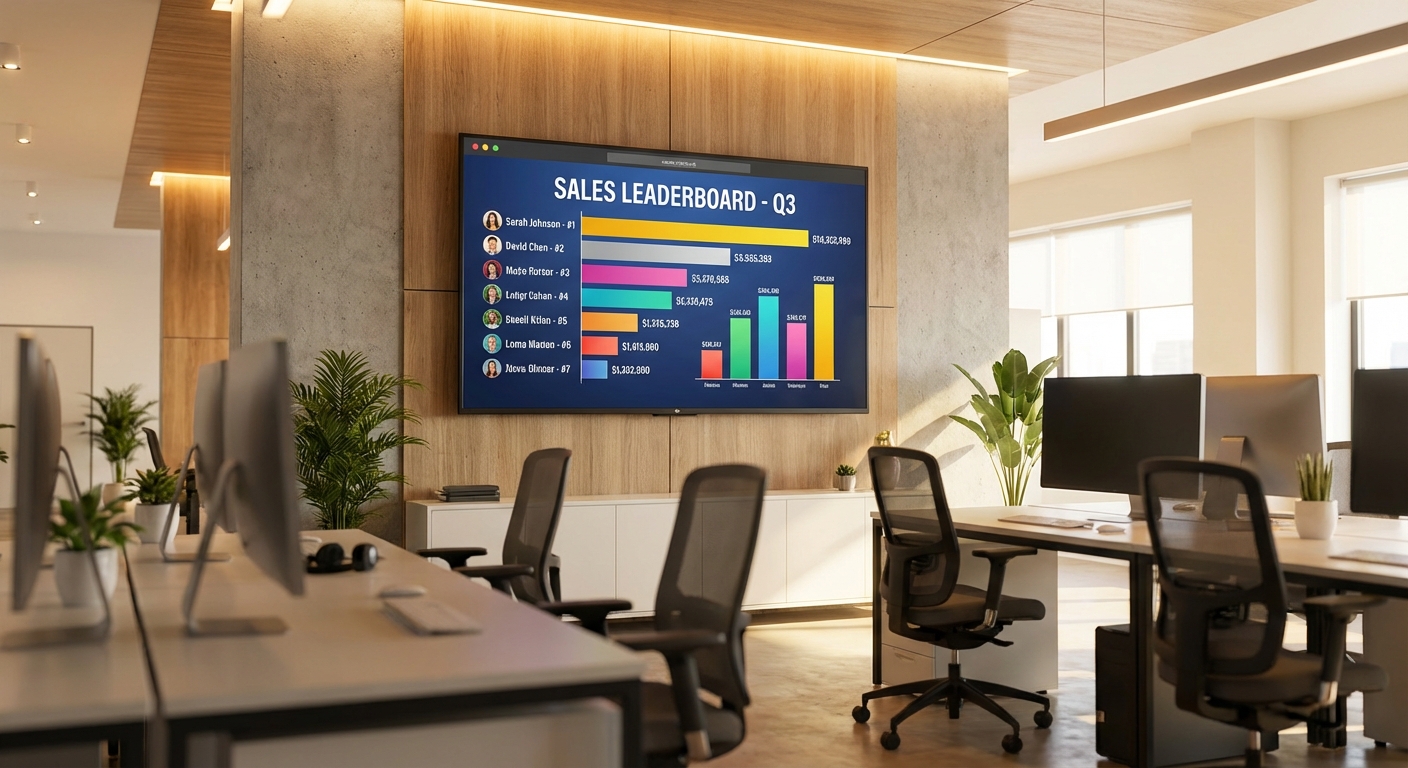
The Recruitment Billings Board: How Agencies Run It on the Office TV
What a billings board is, what perm and temp desks actually track on it, and how to get a live billings leaderboard on your agency's office TV in minutes.
Article Contents
Every recruitment agency has a billings board somewhere. Sometimes it's a whiteboard by the kitchen with consultants' names in marker pen. Sometimes it's a spreadsheet the ops manager updates on Fridays that nobody opens. And in some agencies it's a per-seat "performance visibility platform" that costs more per month than the office coffee budget — of which the floor uses exactly one screen: the leaderboard.
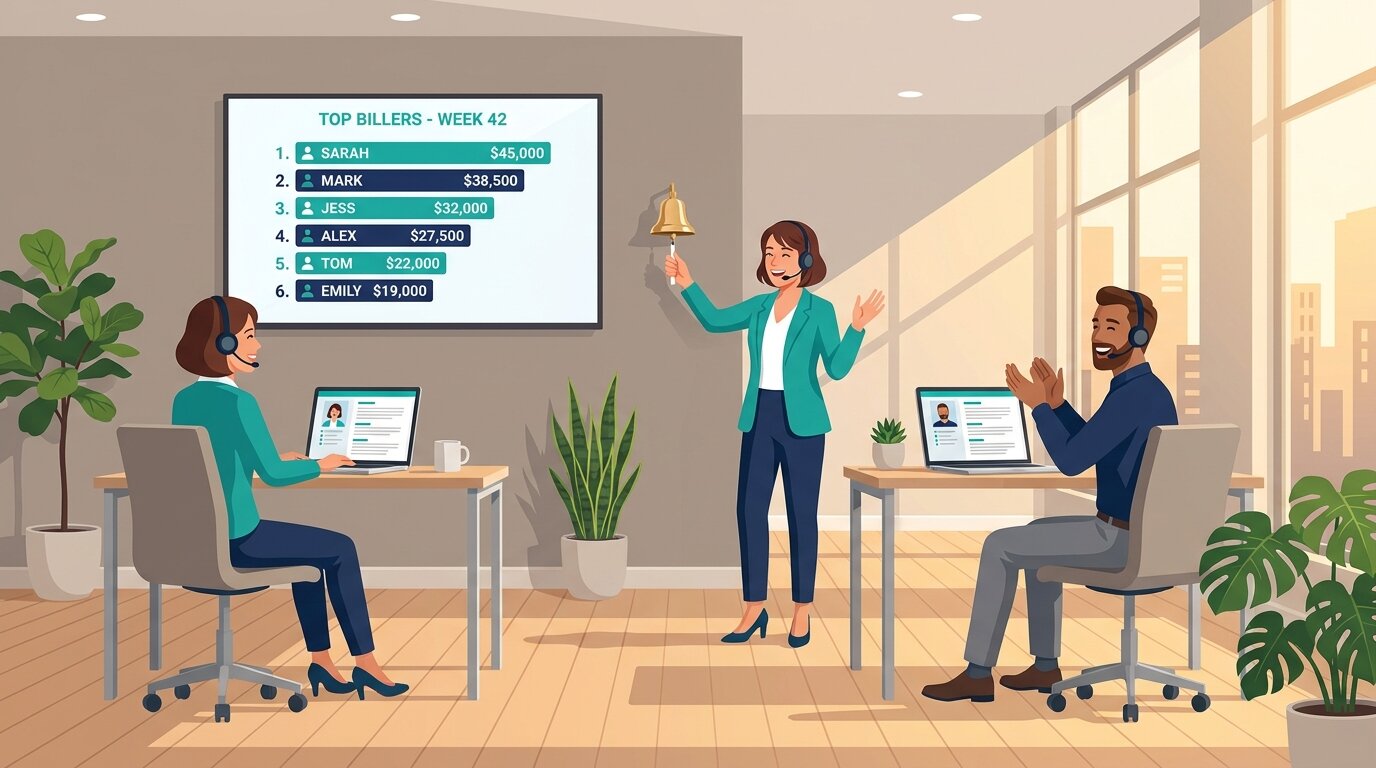 The billings board is the oldest motivation tool in recruitment. The only thing that's changed is the screen it lives on.
A billings board is a running total of fees billed per consultant, displayed where the whole floor can see it. Perm desks count placement fees. Temp and contract desks count margin. Everyone can see who's on top, who's closing the gap, and how the quarter is tracking — without asking, and without waiting for the Monday meeting.
That visibility is the entire mechanism. Recruitment floors run on public numbers the way trading floors do; a consultant who can see they're $4,000 behind second place with three weeks left in the quarter doesn't need a motivational speech.
What Agencies Actually Put on the Board
One metric per board. That's the rule that separates billings boards that survive from the ones that get quietly abandoned — a board tracking a weighted blend of billings, CVs, and "culture points" is a board nobody trusts or checks.
The boards that work, by desk type:
- Perm desks: fees billed this quarter. The classic. A money board rewards the outcome that pays everyone's salary.
- Temp/contract desks: margin per week or month. Same idea, different rhythm — temp margin compounds weekly, so shorter cycles keep it moving.
- Cold desks and rookies: activity boards — CVs sent, interviews arranged, BD calls. A first-year consultant will spend months at the bottom of a money board through no fault of their own. An activity board gives them a race they can actually win while they build a pipeline.
Run the money board and the activity board as two separate boards, not one. Senior billers watch the first; new consultants compete on the second; managers glance at both.
Why the TV Matters
A billings spreadsheet gets opened when someone remembers it exists. A billings board on a TV in the middle of the floor gets seen every time anyone walks to the kitchen — it's ambient, constant, and impossible to ignore, which is precisely the point. (The TV display setup guide covers hardware options; the short version is that any TV with a browser or an HDMI stick is enough.)
The bell helps too. Plenty of agencies pair the board with a physical bell — a deal closes, the bell rings, the board updates before the applause dies down. Low-tech, extremely effective.
Setting Up a Billings Board with Leaderboarded
You don't need a CRM integration or an onboarding call for this. The whole setup is a few minutes:
- Start from the Recruitment Billings Board template — it comes pre-configured with dollar formatting, a running floor total, and sample consultants to swap out.
- Replace the sample names with your consultants and set everyone's quarter-to-date number.
- Share the scorekeeper link with the floor (or keep updates with one manager). Consultants tap the link when a deal lands, enter the fee, and the board re-ranks instantly — no logins, no admin access.
- Open the board's public link in the TV's browser. It updates live from that moment on.
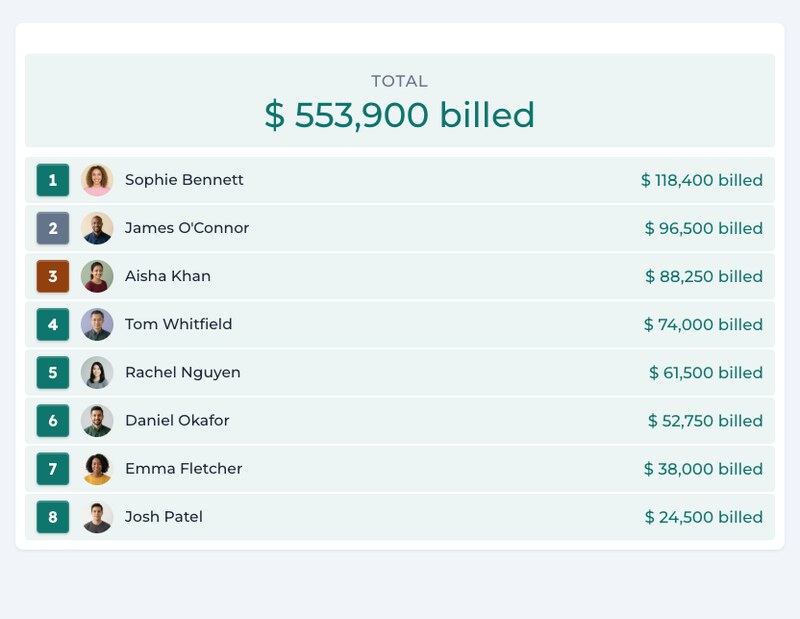 The billings board template: fees per consultant, a floor total at the top, ranked live.
Scores support proper money formatting — $118,400 billed reads like a number worth chasing — and the board displays full-screen with your agency's logo and colours on any screen. Pricing is flat ($19/month for the whole floor), so a 6-consultant boutique pays the same as a 40-desk agency — there's no per-seat meter running.
Keeping It Alive Past Month One
Boards die when they stop moving. Three cadence patterns that keep a billings board interesting:
- The quarter race. The board resets each quarter, and the quarter's top biller keeps something — the best parking spot, the trophy on their desk, the steak dinner. Predictable, fair, and it maps to how targets already work.
- The Friday moment. One fixed moment each week where the board is the agenda: top mover of the week gets named, closest gap gets called out. Two minutes, every Friday, same time.
- The duel. Two consultants at similar levels, one month, loser buys lunch. Head-to-head contests produce more activity than floor-wide ones because nobody can hide in the middle of the pack. More formats in our sales contest ideas guide — they translate to recruitment desks almost verbatim.
When You Need More Than a Board
Honesty clause: a leaderboard is not an analytics platform. If your agency runs on Bullhorn and you want desk-level conversion ratios, source-of-hire reporting, and coaching dashboards, that's the job of Bullhorn's own analytics suite or a platform like OneUp Sales — and if you're weighing that category, our OneUp Sales alternatives guide maps it honestly, including when the full platform is worth it.
But if what your floor actually needs is the number on the wall — who's billed what, updated the second a deal lands — you don't need the platform. You need the board.

Written by Caspar von Wrede
Founder of Leaderboarded. Building tools that help teams track progress and stay motivated.