Workplace Wellness Leaderboard Guide
Build a year-round employee wellness program using leaderboards. Planning calendar, challenge rotation, and tracking strategies for HR and team leads.
Article Contents
Most workplace wellness programs run one step challenge, declare victory, and dissolve. The companies that actually move the needle on employee health treat wellness like a recurring program, not a one-off event. That means planning a rotation of challenges throughout the year, each targeting a different dimension of wellbeing.

This guide is for the person tasked with building that program — whether you're in HR, ops, or just the team lead who got voluntold. We'll cover how to structure a year-round wellness calendar, which challenge types to rotate, and how to use leaderboards to keep participation from evaporating after week two.
Why Most Programs Fizzle Out
The RAND Corporation's workplace wellness study found that fewer than half of eligible employees participate in wellness programs. The programs that survive share three traits: they're dead simple to join, progress is visible to everyone, and there's a social element that makes quitting feel awkward.
Here's what kills the rest:
- One-and-done thinking. A single challenge generates excitement, then nothing follows it. Momentum dies and the next attempt starts from zero.
- Too ambitious. A 12-week program with biometric screenings and health risk assessments sounds great in the proposal deck. In practice, a 4-week challenge gets 3x the participation.
- Invisible progress. When results live in a spreadsheet that one person updates monthly, nobody feels the competition. The SHRM employee engagement research consistently links visible recognition to sustained participation.
The fix isn't a better single challenge — it's a system that keeps cycling through challenges so employees always have something coming up.
Building a Wellness Challenge Calendar
Plan your year in quarterly blocks. Each quarter gets one primary challenge (4 weeks) and one lighter "always-on" habit tracker. This cadence gives people recovery time between intense challenges while maintaining a baseline of engagement.
Sample Annual Calendar
Q1 (January-March): Start the year with a step challenge — it's the most accessible format and rides the New Year motivation wave. Pair it with a hydration habit tracker (daily water intake in glasses).
Q2 (April-June): Shift to a movement challenge where any physical activity counts by minutes. Swimming, cycling, yoga, gym sessions — all scored equally. This includes people who don't enjoy walking-focused competitions. Pair with a sleep consistency tracker.
Q3 (July-September): Run a team-based challenge to strengthen cross-department connections. Group challenges with team averages (not totals) prevent smaller teams from being disadvantaged. Pair with a mindfulness minutes tracker.
Q4 (October-December): Close the year with a weight management challenge focused on maintaining healthy habits through the holiday season. Frame it around consistency rather than loss — "maintain your baseline" resonates better than "lose 10 pounds" when there's office cake every week. Pair with a gratitude or acts-of-kindness tracker for the season.
Challenge Types Beyond Fitness
The best wellness programs acknowledge that health isn't just physical. Rotating between these categories prevents fitness enthusiasts from dominating every round and brings in employees who'd never join a step competition.
Hydration challenges. Track daily water intake in glasses or ounces. Surprisingly competitive — people start carrying water bottles everywhere once their name is on a leaderboard.
Sleep challenges. Track hours of sleep per night, targeting consistency (7-8 hours) rather than maximum sleep. This resonates with the overworked crowd who know they should sleep more but need the social nudge.
Mindfulness minutes. Meditation, breathing exercises, or quiet walks. Harder to gamify, but tracking minutes works. Appeals to people who find physical competitions stressful rather than fun.
Learning challenges. Track professional development hours — online courses, books read, lunch-and-learn attendance. Ties wellness to career growth, which gives managers an easier case for budget approval.
Making Progress Visible with Leaderboards
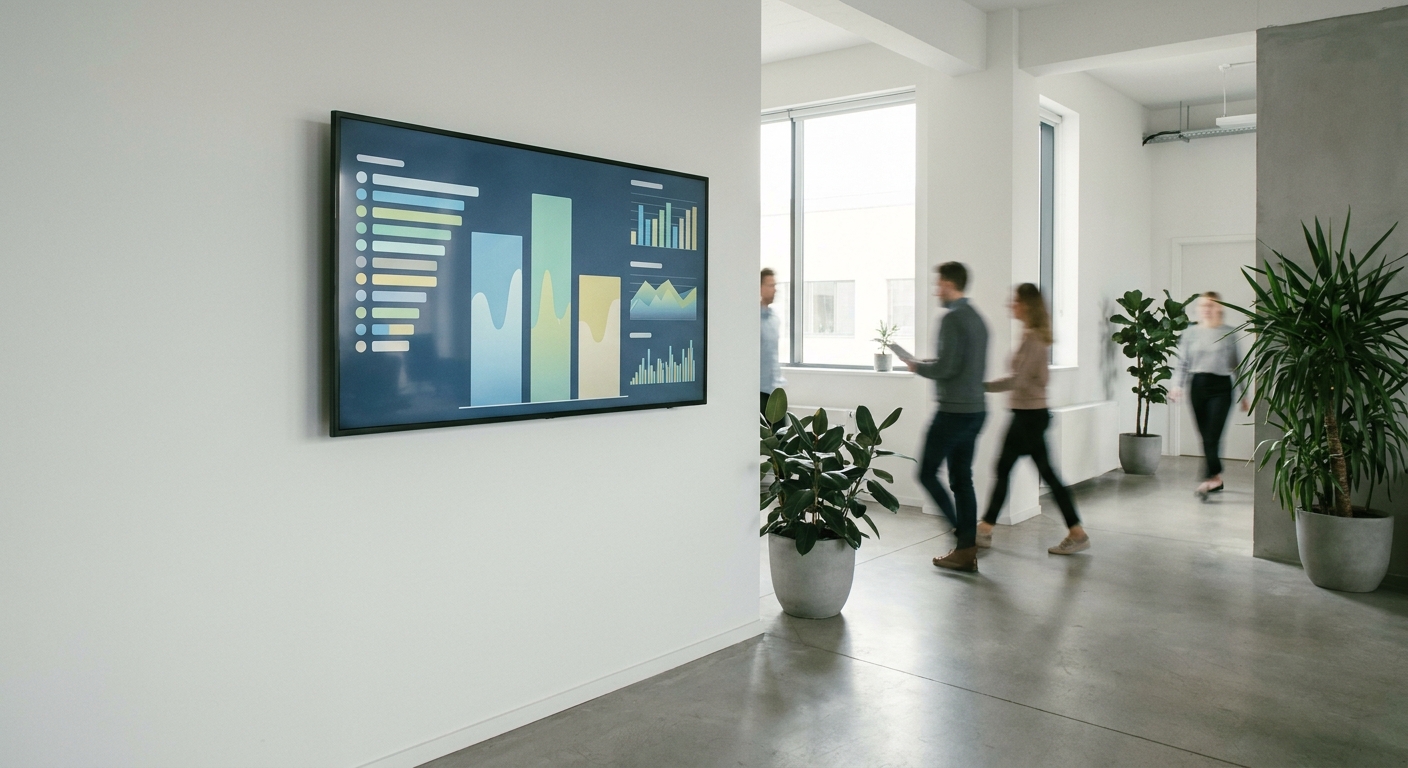
The recurring theme in employee engagement research is visibility. People stay engaged when they can see where they stand. A leaderboard turns abstract wellness goals into a daily scoreboard — and that changes behavior more than any email reminder.
Leaderboarded.com handles the display and ranking side. It doesn't automatically sync with fitness trackers or apps — participants track their activity using smartphone apps or wearables, then the scorekeeper updates the leaderboard with totals. This keeps things simple and free compared to enterprise wellness platforms that charge $10-15 per employee per month.
For organizations already tracking data in spreadsheets, you can connect Google Sheets directly to create a live leaderboard that updates automatically when the sheet changes.
Where to Display It
The leaderboard only works if people see it regularly. Pick at least two of these:
- Office TV or break room screen — passive visibility for in-office teams. See our TV display guide for setup.
- Slack or Teams channel — share the presentation link weekly with a brief update.
- Company intranet or SharePoint — embed the leaderboard directly so it's always one click away.
- All-hands meetings — screen-share the leaderboard monthly. Public recognition drives the next month's participation.
Individual vs. Team Format
Run individual leaderboards for groups under 20 people. Beyond that, team-based competitions work better — they create accountability (nobody wants to be the one dragging their team down) and prevent the same three fitness enthusiasts from winning every round.
The strongest format combines both: individual scores feed into team totals, giving everyone two reasons to participate.
Program Management Tips
The Four-Week Rule
Four weeks per challenge. Long enough to build a habit, short enough that the end is always in sight. We've seen 90-day challenges lose half their participants by week six. A shorter challenge that people actually finish beats a longer one they abandon.
Rewards That Don't Backfire
Cash and gift cards work fine. But the most effective rewards signal that the company values time and wellbeing: an extra day off, a late-start Monday, leaving early on Friday. Avoid rewards that undermine the program — a pizza party as the prize for a fitness challenge sends mixed messages.
Inclusive Design
If the same person wins every challenge, everyone else stops trying. Use improvement-based scoring (percentage gain over your own baseline) instead of absolute numbers. This gives the person who goes from 3,000 to 6,000 daily steps the same shot as the marathon runner logging 15,000.
Remote workers participate fully — they just need the leaderboard link and a way to report numbers. A dedicated Slack channel or weekly email to the scorekeeper works.
Leadership Participation
When the VP of Engineering shows up on the leaderboard — even in last place — participation rates jump. It doesn't matter where leaders rank. What matters is that they're visibly participating, which signals "this isn't just an HR checkbox."
Measuring Whether It's Working
Track two numbers: participation rate (what percentage of employees join) and retention rate (what percentage are still active in week four). If 50% join and 35% finish, that's solid. If those numbers climb across quarters, the program is working.
Don't try to measure health outcomes directly — behavior change takes longer than one challenge cycle. Instead, look for leading indicators: are people talking about it in Slack? Are teams forming organically? Is anyone asking when the next challenge starts before you announce it?
After each challenge, run a 3-question survey: what worked, what didn't, what should we try next. The feedback shapes your rotation, and the act of asking signals that this isn't a top-down mandate.

Written by Caspar von Wrede
Founder of Leaderboarded. Building tools that help teams track progress and stay motivated.