Sales Leaderboards: Drive Revenue Growth (2026)
How to use sales leaderboards to create healthy competition, pick the right metrics, and drive measurable revenue growth for your team.
Article Contents
Competition is a strange motivator. It can push people to their best work — or tip them into cutting corners. A Harvard Business Review study found both effects happen in real companies. So the question isn't whether to use competition in sales. It's how to structure it so it drives performance rather than paranoia.
Sales is inherently competitive. Top performers are visible whether you formalize it or not. Leaderboards just make the rules explicit — and when designed well, they channel that competitive energy into outcomes you actually want.
 Friendly competition can quickly turn into rivalry when employees feel threatened.
How Duolingo Proved Leaderboards Change Behavior
In 2018, Duolingo's user retention was dropping. Language learners weren't sticking with their goals — not unusual, but a real threat to the business. Their fix: a social leaderboard that let users track progress against other learners. The result was a 34% increase in user retention.
That's social comparison theory in action. Seeing where you stand relative to others creates tension. Tension creates action.
 Leaderboards keep participants motivated while improving company metrics.
Picking the Right Metrics
The biggest mistake with sales leaderboards is tracking the wrong thing. What you measure is what people optimize for — so choose carefully.
The right metrics depend almost entirely on your sales cycle length. A real estate firm shouldn't track daily call volume; they should track houses sold and pipeline value. A call center should probably track both daily call volume and conversion rate. Here are the common options:
- Revenue generated
- Deals closed
- Call volume and outreach effort
- Conversion rate (leads to customers)
- Pipeline value
Pick two or three — what sales teams call key performance indicators. Tracking everything dilutes focus.
Real-Time vs. Weekly Tracking
Update frequency matters as much as which metrics you track. The rule is simple: match your tracking cadence to your sales cycle length.
Real-time or daily updates work well for fast-paced environments — call centers, retail sales, short B2C cycles. Instant feedback is motivating when progress is visible within hours or days.
Weekly or monthly tracking fits longer cycles — B2B deals, real estate, enterprise software. Updating a leaderboard daily when deals close quarterly just shows a lot of zeros. It demoralizes rather than motivates.
| Sales Cycle Length | Recommended Tracking | Leaderboard Focus |
|---|---|---|
| Short (1 day - 1 week) | Real-time or daily | Deals closed, revenue per day, call volume |
| Medium (1-3 months) | Weekly | Pipeline value, revenue closed, meetings booked |
| Long (3+ months) | Monthly or quarterly | Total contract value, lead-to-sale conversion rate |
For a deeper look at this, read our post on competition formats: weekly, monthly, and quarterly strategies.
Individual vs. Team Leaderboards
This choice depends on what you're trying to change. Individual leaderboards drive personal accountability and self-improvement. Team leaderboards build collaboration — people pull for each other instead of competing against each other. A hybrid approach, where both individual scores and team totals are visible, balances both.
There's no universal right answer. If your team already has healthy individual competition and you're seeing collaboration suffer, shift toward team-based. If people are coasting and accountability is the problem, individual tracking tends to fix that faster.
 When individual performance affects the whole team, a hybrid leaderboard is worth considering.
What Actually Gets Run as a Sales Leaderboard
Before we get to the setup, a quick aside on the data behind this post. Leaderboarded is the tool we build, and we have a fairly honest view of what teams actually run — not what they sign up to do, what they're still updating a month later. As of May 2026, the pattern across active sales-competition boards on the platform looks like this:
- About 200 active sales-competition boards at any given time. The number is steady — boards expire as their contest ends, new ones replace them.
- Median is 7 reps per board. Roughly a third are small (2–5 people on a founding sales team or single-territory pod), about half have 6–15 (mid-size orgs, regional groups), and around 1 in 8 has 16 or more. The largest active board right now has 77 reps.
- Eight in ten are a simple ranked list of reps. The rest split between boards tracking progress toward a revenue target, boards showing several metrics side by side (calls + demos + closes), and team-based rankings.
- What's measured varies more than the format. Active board titles right now range from week-long BDR call sprints to four-week retail outbound pushes to monthly closed-won races and persistent year-round revenue standings. About a quarter of titles carry an explicit time period (weekly / monthly / quarterly); the majority are ongoing.
The honest read: most sales leaderboards that stick are under 15 reps, persistent rather than one-off contests, and tracking a single counter — not an elaborate points system. The expensive enterprise sales gamification platforms market themselves around the inverse.
Visual Progress Makes Goals Feel Real
Numbers in a spreadsheet don't create urgency. Visual indicators do. Progress bars, rankings, and milestone markers turn abstract targets into something people can feel.
Progress bars show the gap between where someone is and where they need to be — that gap is motivating in a way a percentage number isn't. Rankings tell the story at a glance. Milestone markers let you celebrate incremental wins without waiting for the final result.
Keep the board simple enough that anyone can read their status in under five seconds. If it requires explanation, it won't get checked.
Mobile Access for Field Sales Teams
Field reps don't sit near an office TV. They're in parking lots between appointments, checking their phones. If your leaderboard isn't mobile-accessible, it's invisible to the people who arguably need it most.
A leaderboard that loads cleanly on a phone gives field reps the same instant feedback that in-office teams get from a wall screen. That connection to the rest of the team matters — it's the difference between feeling like a solo operator and feeling like part of something.
 A mobile-accessible leaderboard keeps field reps connected to the team.
Setting Up Your Sales Leaderboard
For a hands-on walkthrough of creating your first board, see our step-by-step setup guide.
Leaderboarded lets you create both individual and team sales leaderboards without spreadsheets or complicated setup. You can customize the scoring units (calls made, units sold, revenue), add team logos and profile pictures, and share a live view with your entire team.
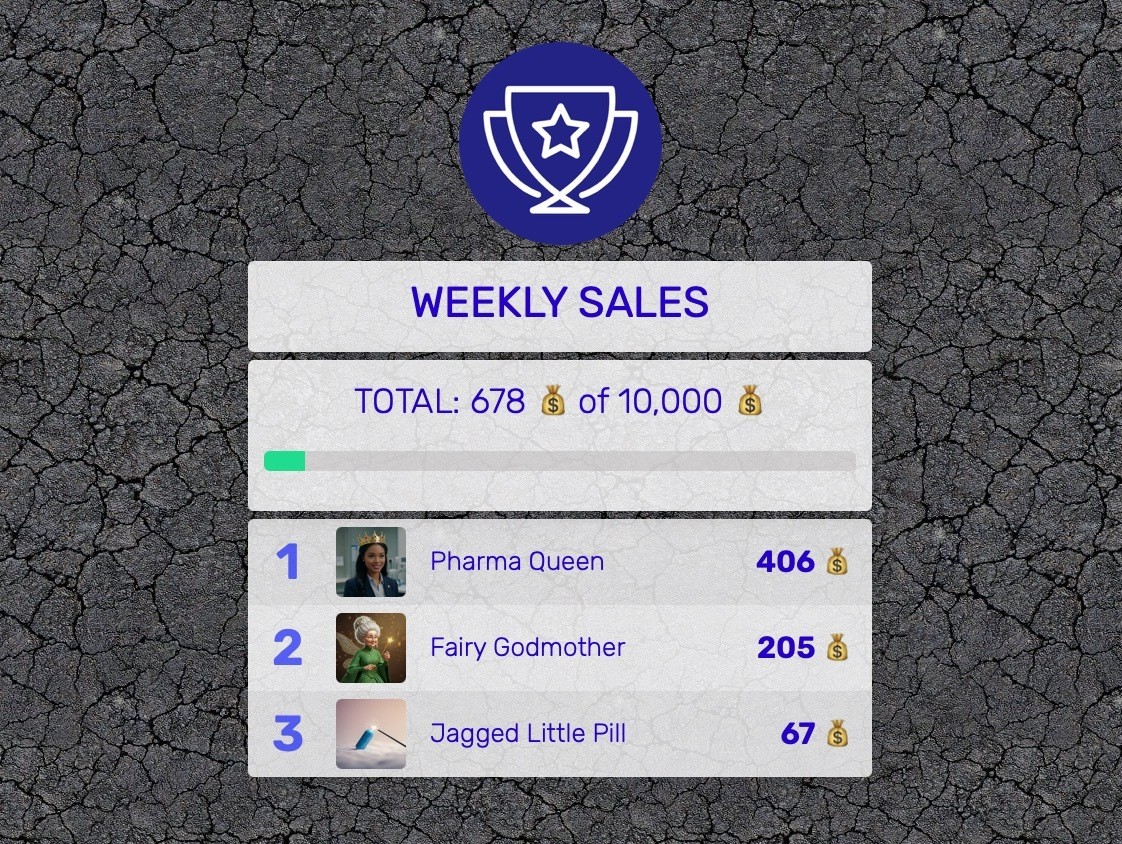 Track individual performance over time with a standard leaderboard.
For team-based tracking, team leaderboards show both individual contributions and aggregate team scores — useful when you want accountability at the individual level but competition at the team level.
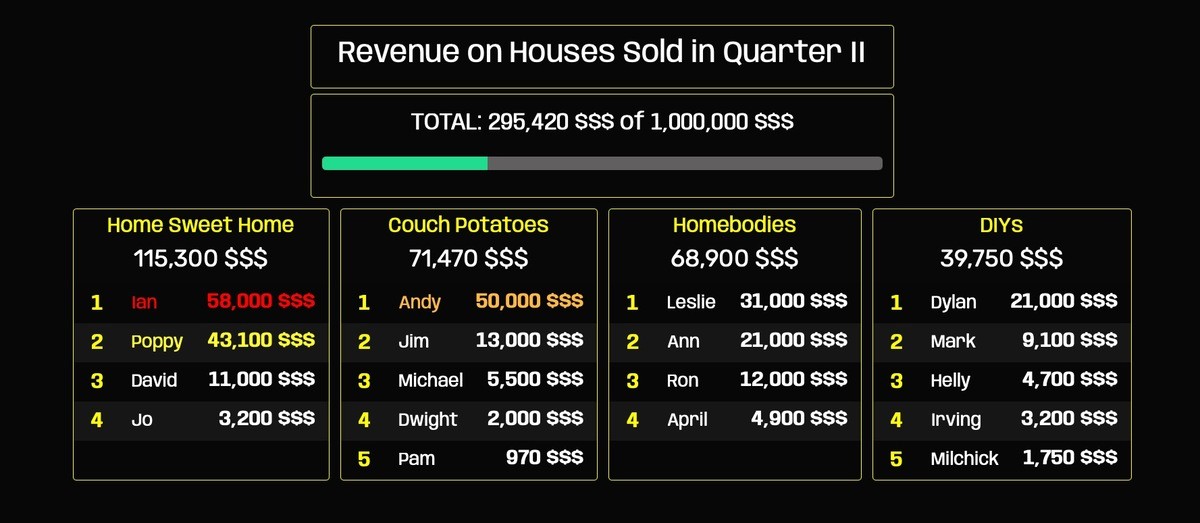 Team leaderboards keep individual accountability while building collective motivation.
Displaying Your Leaderboard on Office Screens
For a complete walkthrough of hardware options, display settings, and multi-screen setups, see our dedicated guide on putting a sales leaderboard on a TV.
For maximum visibility, put the leaderboard on a TV or office screen. You can customize the display with URL parameters: hide the search box, disable comments, and enable auto-scroll for large teams. Use rank filtering to show different tiers on separate screens — top performers on the main floor, other ranges in different departments. See the display customization options for the specifics.
For regular ideas on using Leaderboarded effectively, sign up for our newsletter.

Written by Caspar von Wrede
Founder of Leaderboarded. Building tools that help teams track progress and stay motivated.